Launch offer — valid today only

📄 Digital book in PDF · read it on your phone or print it

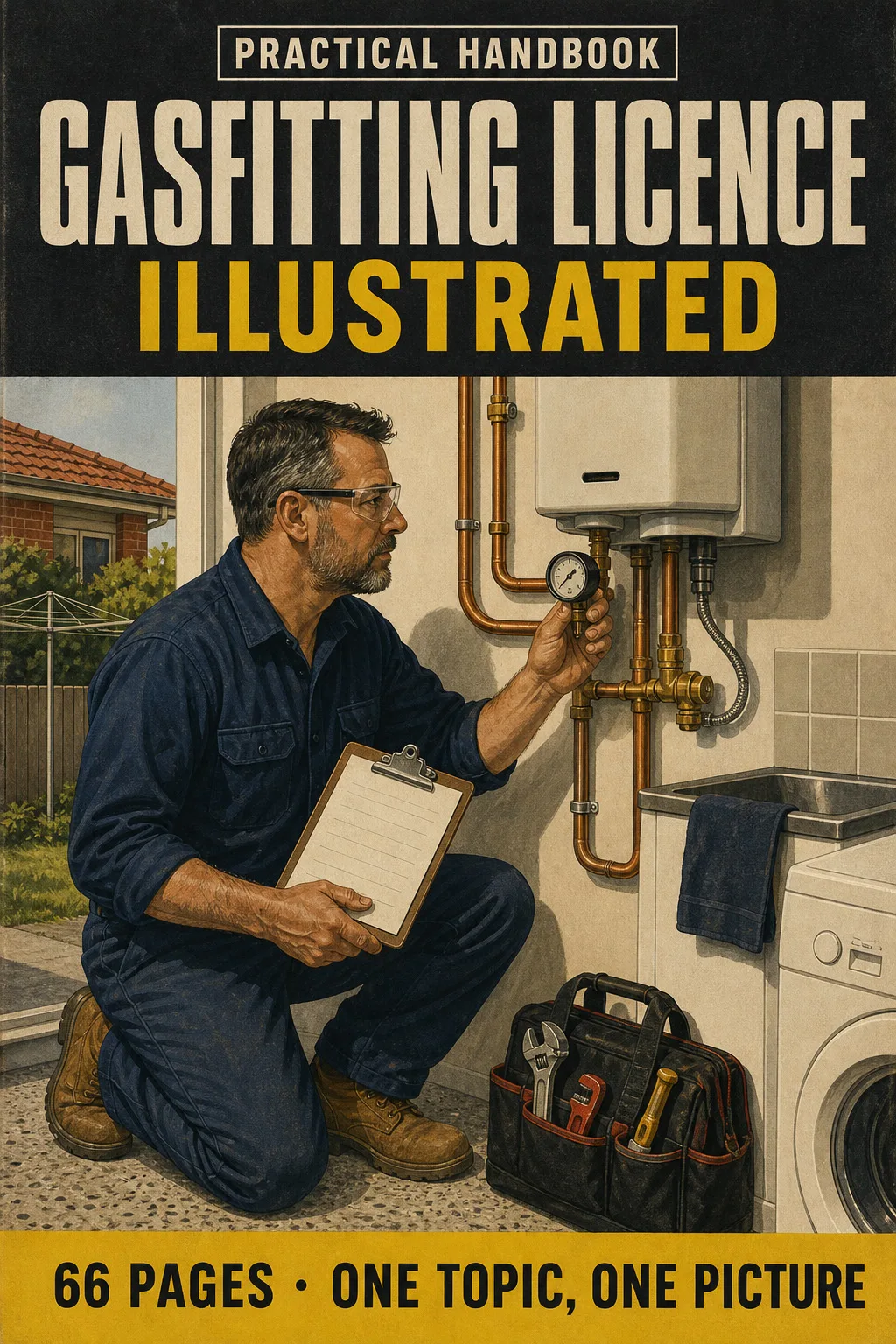
Gasfitting in Drawings: Meter to Flue in the Order the Gas Flows One Topic on Every Page

Written for Australian gasfitters, in kPa and MJ/h: natural gas and LPG, meter and cylinder location, pipe materials, pipe sizing, soundness testing, Type A appliances, ventilation, flues and commissioning. Every topic has its own page: the drawing first, then what you need to remember. 66 illustrated pages.

GET GASFITTING LICENCE ILLUSTRATED

🔒 Secure checkout · PDF by email · 30-day guarantee

Every topic, its own pageEach rule drawn where it happens on the job, with the explanation beside it
66 illustrated pages9 parts, from natural gas vs LPG to exam revision
Up-to-date sourcesChecked against AS/NZS 5601.1 (current edition), with Victorian licence requirements where they apply
PDF by emailFormat

Look Inside the Book

Every page has one big labelled drawing and a box with the numbers and steps you need to know:

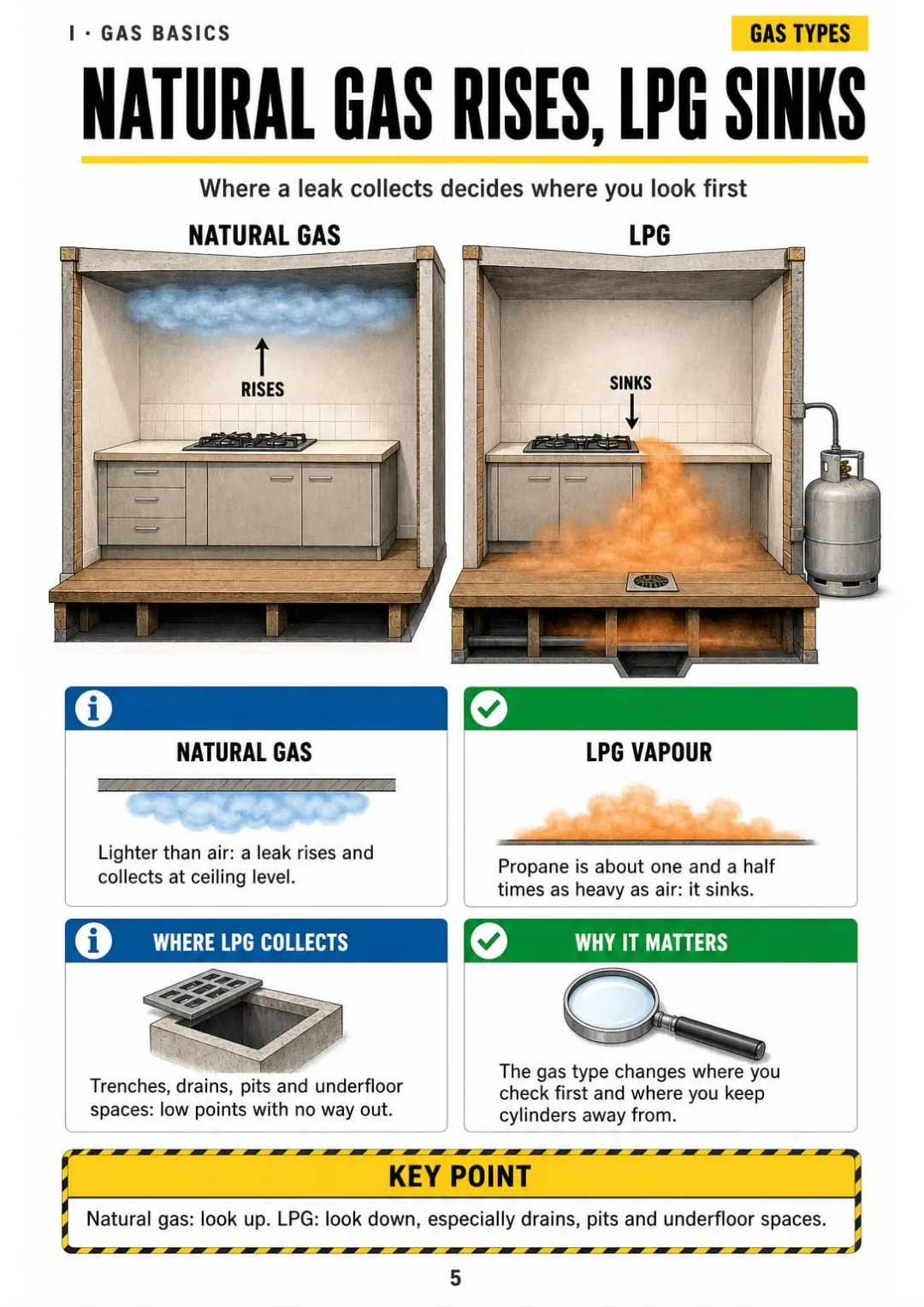
Natural gas collects at the ceiling; LPG (propane, about 1.5 × air) collects in drains, pits and underfloor.
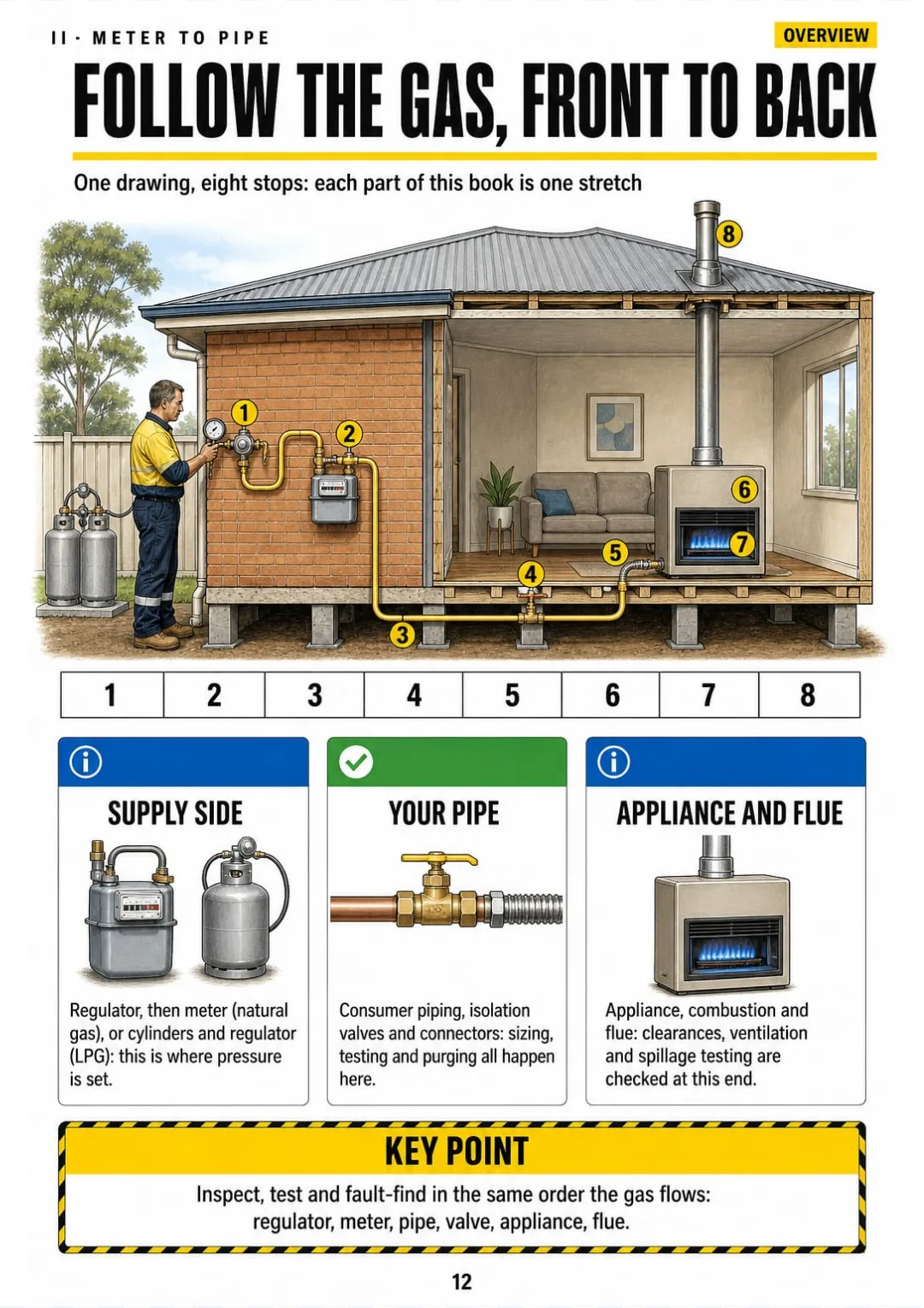
Regulator → meter → pipe → valve → connector → appliance → flame → flue: one line, eight stops.
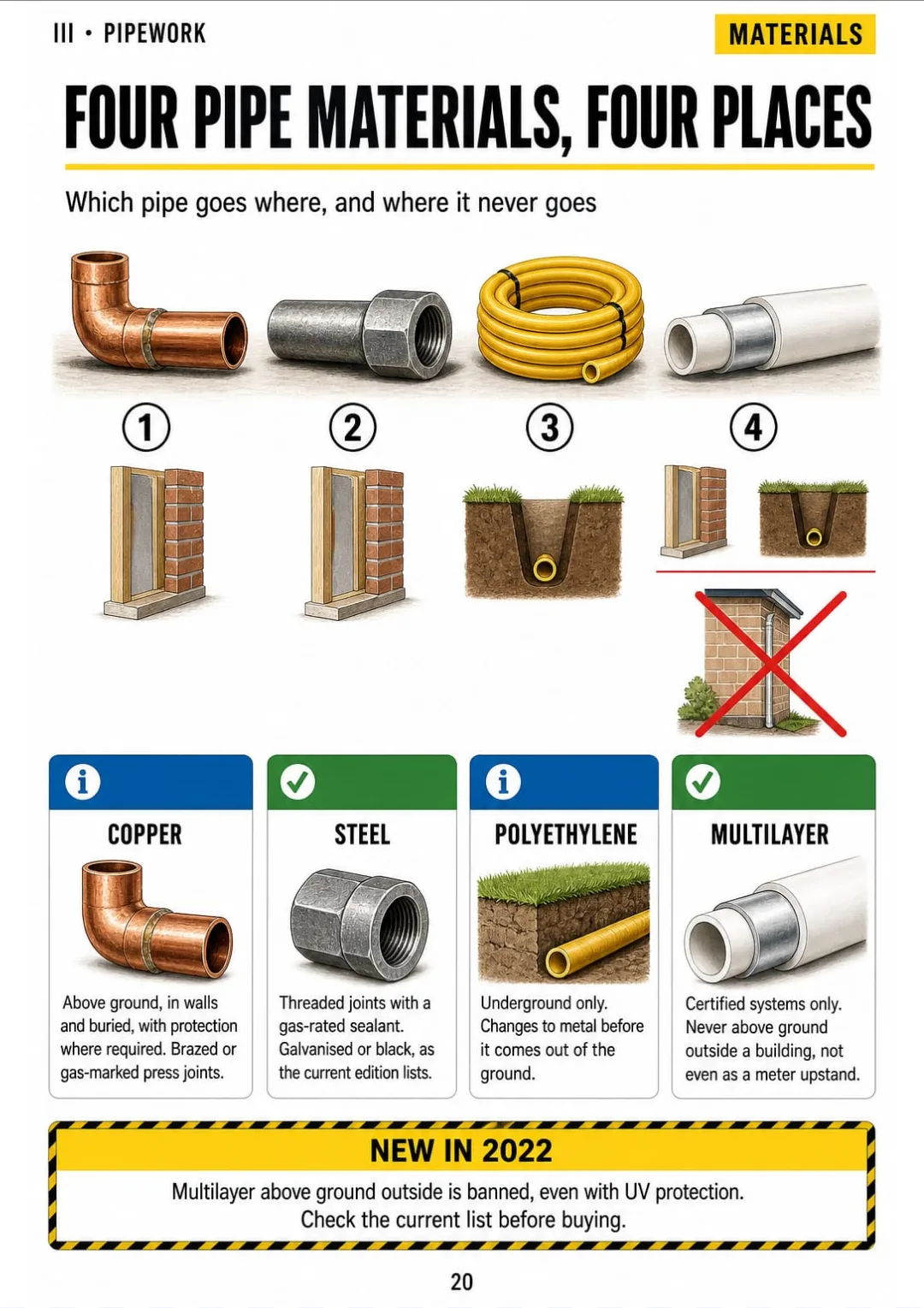
Copper, steel, PE and multilayer: multilayer never above ground outside a building (cl. 5.3.16)
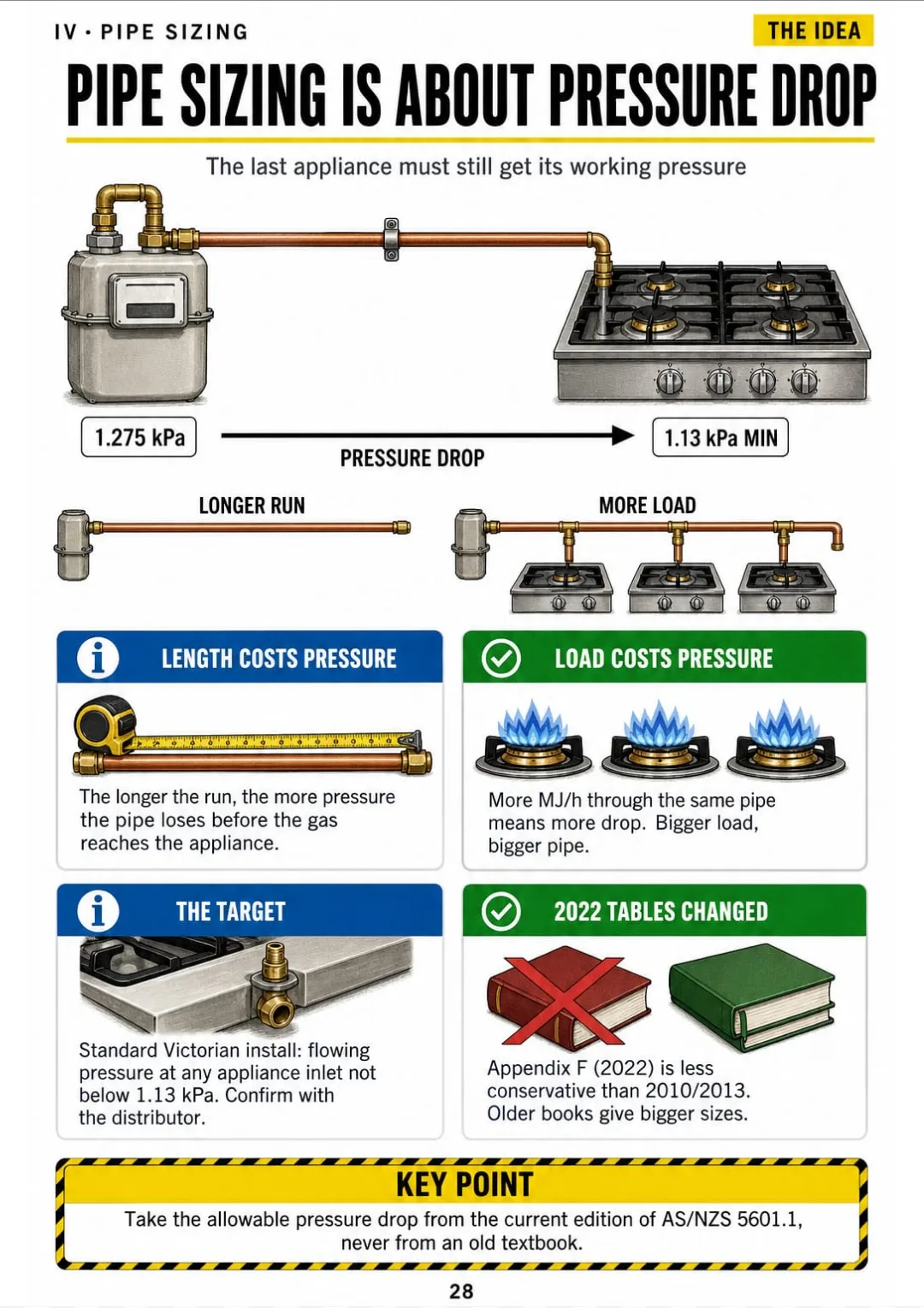
Length and load eat pressure: the last inlet must still see 1.13 kPa (standard Victorian install).
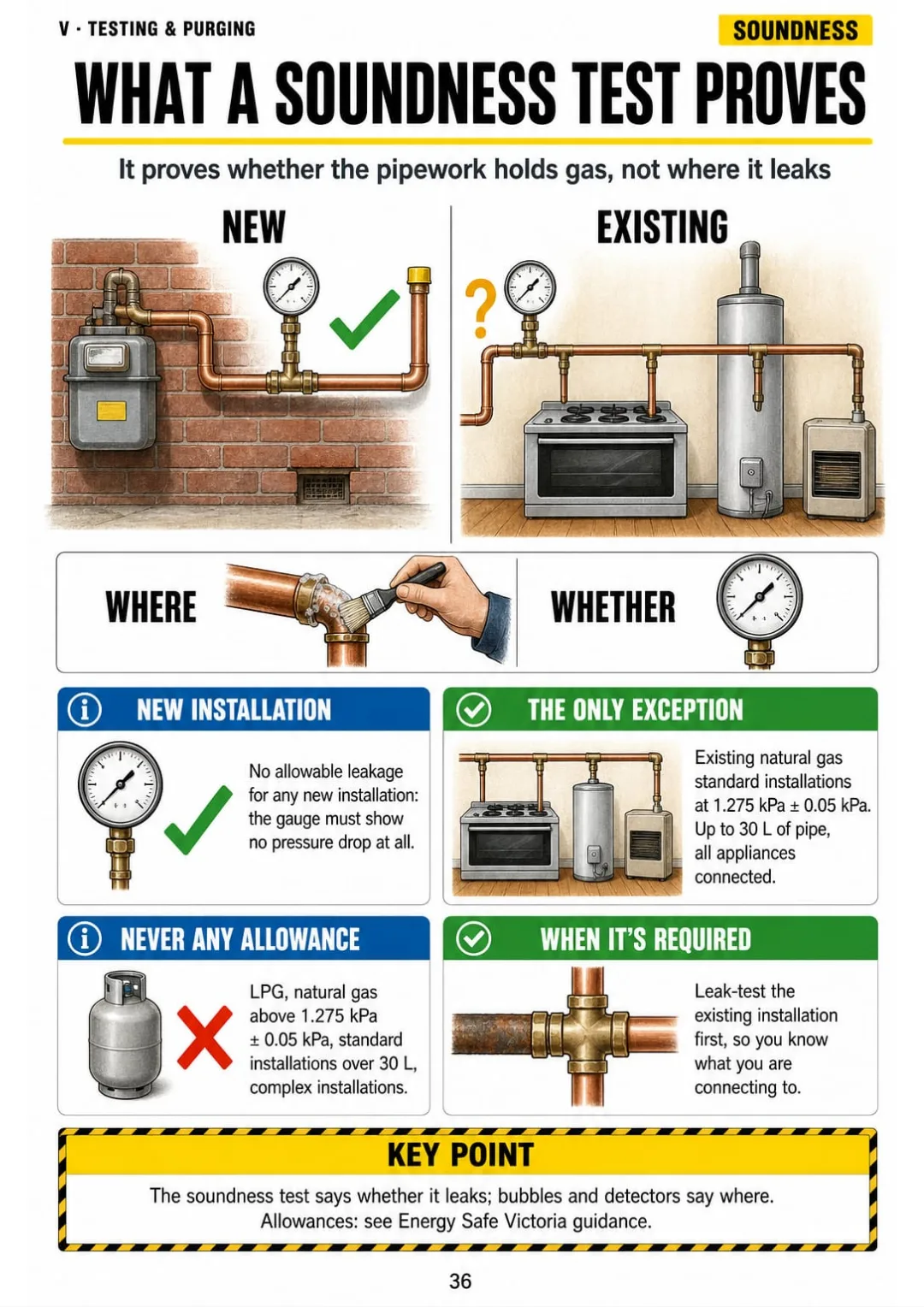
New installation: zero drop. Allowable leakage only for existing natural gas standard installations up to 30 L.
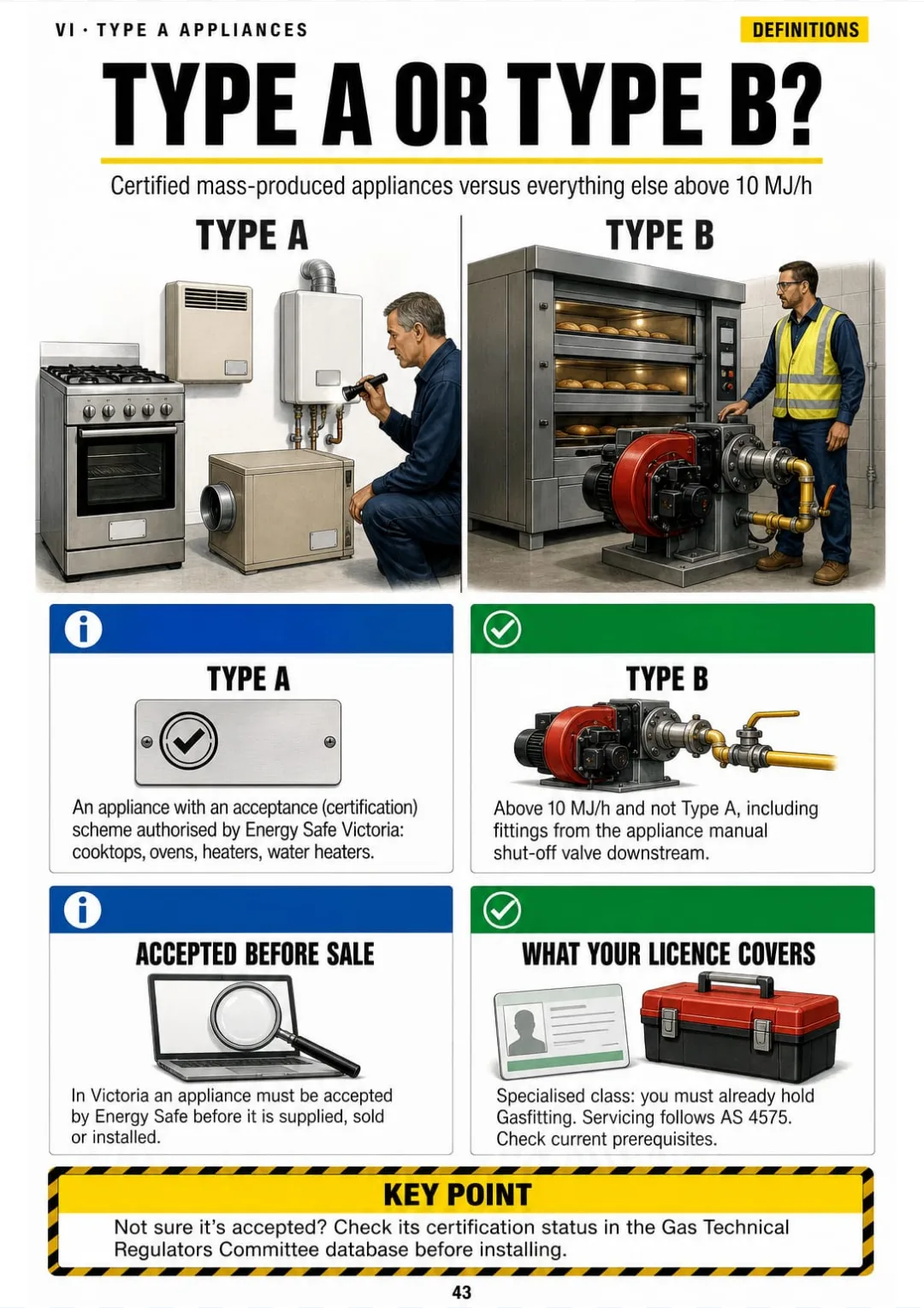
Type A: certified scheme. Type B: above 10 MJ/h, not Type A, from the manual shut-off valve downstream.
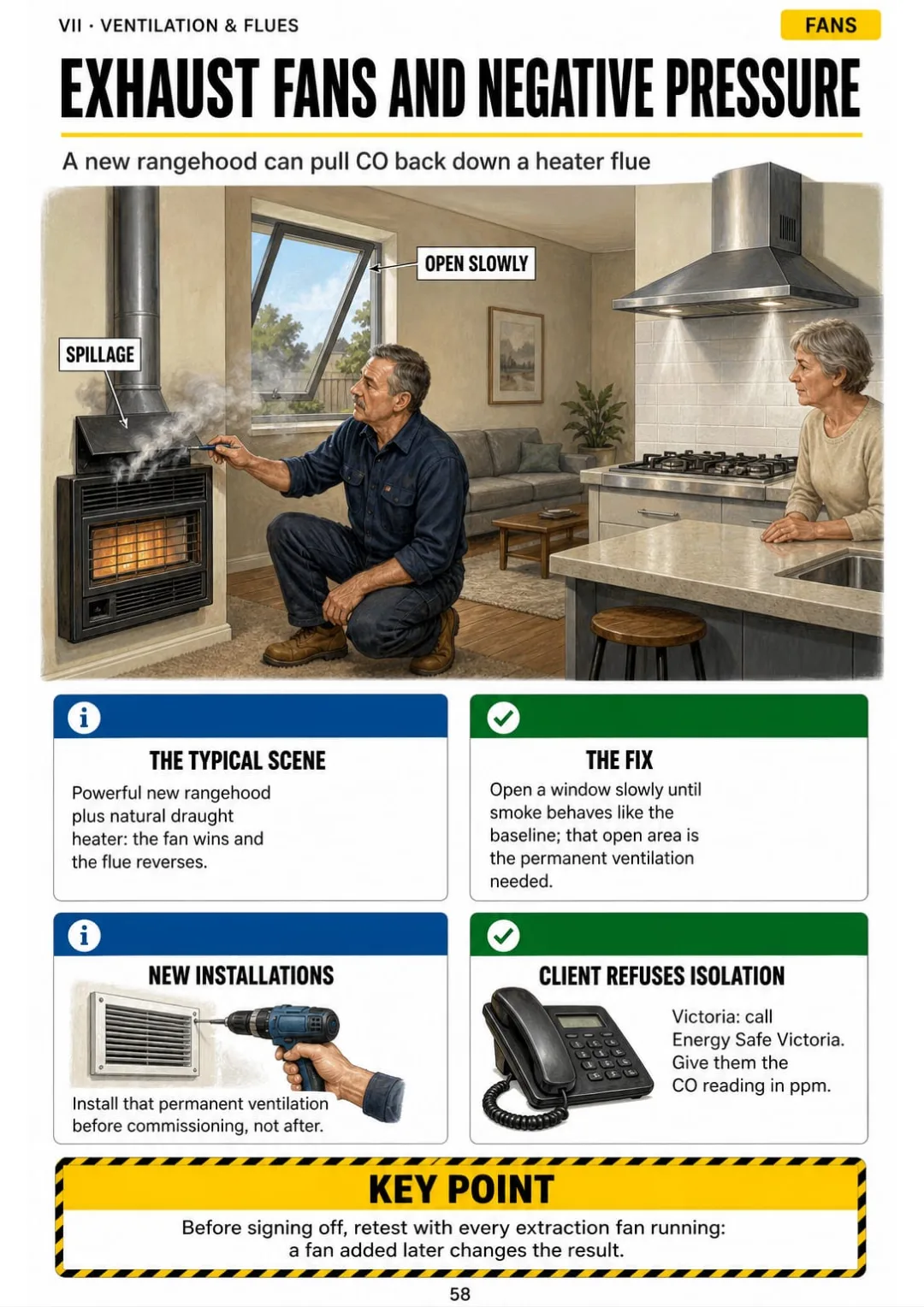
Exhaust fans can reverse a flue: find the ventilation needed with the window and smoke test.
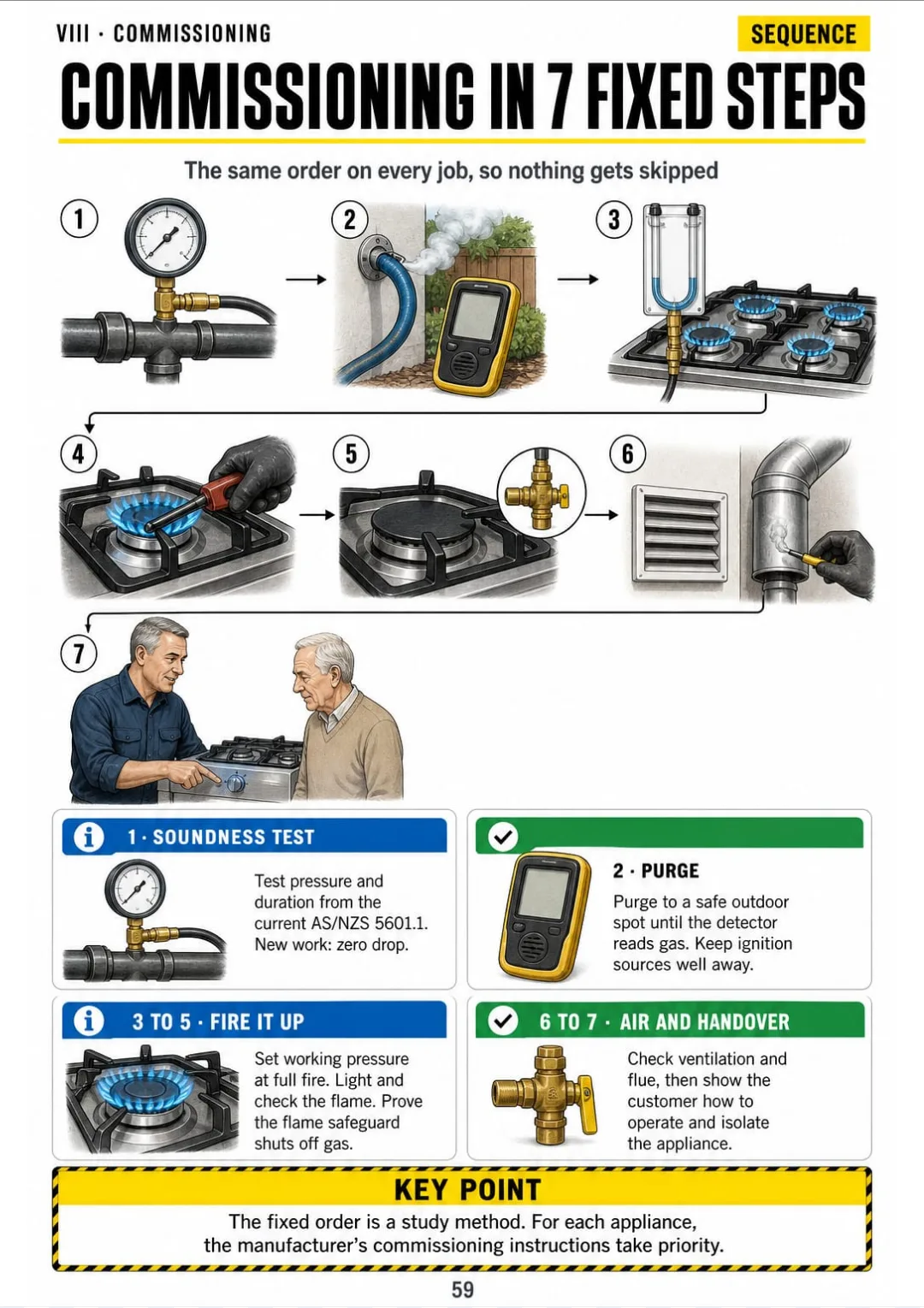
Test, purge, pressure, flame, safety, flue, handover: 7 steps in one order.

Swipe to see more →

These are real pages from the book. The table of contents is the full one: 9 parts and 62 topics.

The Problem Isn't You. It's How It Was Explained to You.

You're on a job where the run starts in copper inside and finishes in a buried section out the back. You have to decide what pipe goes where. You know the trade, but which material is allowed in which place?

In the standard it's split across clauses and tables: materials in one section, locations in another, the exceptions further on. You read it at night and by morning the four materials have blurred into one.

Copper, steel, PE and multilayer: multilayer never above ground outside a building (cl. 5.3.16)

In the book it's one page: copper, steel, PE and multilayer drawn side by side, each in the place it belongs. Multilayer is marked clearly: never above ground outside a building.

The rest of the syllabus is done the same way: pipe sizing by pressure drop, the soundness test in fixed steps, Type A or Type B, combustion air, commissioning. Each one has its own page.

You look at the drawing, you see where each pipe goes, and you make the call on site without opening the standard again.

COMPARE FOR YOURSELF

The Same Topic, Two Ways to Study It

THIS
  • The standard: lines and lines of clauses
  • Installation layouts explained only in words
  • You walk into the exam with doubts
Before any work begins, the gasfitter is expected to identify where the consumer installation starts and where it ends, which is different for natural gas and for LPG, and then to consider each component between those two points in turn, including pressure regulation, metering, the piping itself, isolation, the connection to the appliance, the appliance and the removal of the products of combustion, keeping in mind that each of these components carries its own requirements, conditions and exceptions, which are explained in separate places and have to be read together.
FOR THIS
  • The whole installation in one drawing
  • The eight stops in a box
  • You see it and you get it
Regulator → meter → pipe → valve → connector → appliance → flame → flue: one line, eight stops.
CONTENTS

Take a Look at the 9 Parts and 62 Topics

Gas basics, meter or cylinder to pipe, pipework and materials, pipe sizing, soundness testing and purging, Type A appliances, ventilation and flues, commissioning and exam revision: 66 pages, all illustrated

IGas Basics for Gasfitters · pp. 5-11
  1. Natural Gas vs LPG: Which Way It Goes When It Leaks
  2. The Fire Triangle and Flammability Limits
  3. Pressure in kPa: Reading the Numbers Right
  4. Heating Value: Why MJ Matters More Than Cubic Metres
  5. Complete vs Incomplete Combustion
  6. Carbon Monoxide: The Gas You Can't See
  7. Odorant and Gas Detection on the Job
IIFrom Meter or Cylinder to the Pipe · pp. 12-19
  1. The Installation Followed the Way the Gas Flows
  2. Where the Network Ends and Your Work Begins
  3. Meter Position and Clearances
  4. LPG Cylinders: The Location Rules
  5. Regulators: Two-Stage LPG and Natural Gas
  6. Automatic Changeover on Twin Cylinders
  7. Isolation Valves: Where They Must Be
  8. Pipework Entering a Building
IIIPipework and Materials · pp. 20-27
  1. Approved Pipe Materials at a Glance
  2. Copper: Brazing vs Press Fittings
  3. Steel Pipe and Threaded Joints
  4. Polyethylene Underground Only
  5. Burying Pipe: Depth, Bedding and Marker Tape
  6. Pipe Support and Clip Spacing
  7. Concealed Pipe: Walls, Roofs and Underfloor
  8. Flexible Connectors and Bayonet Fittings
IVPipe Sizing Step by Step · pp. 28-35
  1. Why Pipe Sizing Is About Pressure Drop
  2. The 5 Sizing Steps, Always in the Same Order
  3. Reading Appliance Input from the Data Plate
  4. Measuring the Index Run
  5. Worked Example: One Cooktop, One Run
  6. Worked Example: Three Appliances on a Branch
  7. LPG vs Natural Gas: Same Pipe, Different Answer
  8. Adding an Appliance to an Existing Installation
VSoundness Testing and Purging · pp. 36-42
  1. What a Soundness Test Proves
  2. Setting Up the Test: Gauge, Isolation and Test Point
  3. Soundness Test in Fixed Steps
  4. Temperature and False Results
  5. Finding the Leak: Bubbles, Detector, Sections
  6. Purging Pipework Safely
  7. Recording the Test
VIType A Appliances · pp. 43-50
  1. What Makes an Appliance Type A
  2. Reading the Installation Instructions First
  3. Cooktops and Ovens: Clearances Above and Around
  4. Space Heaters: Flued and Unflued
  5. Instantaneous vs Storage Water Heaters
  6. Ducted Heaters: Gas Side Only
  7. Outdoor Appliances and Barbecues
  8. Burner Basics: Injector, Primary Air, Flame
VIIVentilation and Flues · pp. 51-58
  1. Air for Combustion: Why the Room Matters
  2. Ventilation Openings: High and Low
  3. How a Natural Draught Flue Works
  4. Room-Sealed and Fan-Assisted Flues
  5. Flue Terminals: The Clearances Inspectors Check
  6. Flue Termination Above the Roof
  7. Spillage Test: Checking the Flue Works
  8. Exhaust Fans and Negative Pressure
VIIICommissioning and Handover · pp. 59-62
  1. Commissioning in the Same Order Every Time
  2. Setting and Checking Operating Pressure
  3. Gas Rate from the Meter: The Calculation
  4. Flame Picture and Safety Devices
IXRevision and Exam Prep · pp. 63-66
  1. The Whole Installation on One Page
  2. Numbers to Have at Hand
  3. Common Mistakes Before an Inspection
  4. How to Use This Book Before the Exam

One Page, One Topic, All Clear

Think of it this way:

You've finished a new install and the gauge is on the test point. You need to know what the soundness test actually proves, and you need it now, not after twenty minutes in the standard.

You open the soundness testing page and it's all drawn: gauge, isolation, test point and the fixed steps in order. New installation: zero drop.

New installation: zero drop. Allowable leakage only for existing natural gas standard installations up to 30 L.

Same with pipe sizing, gas rate from the meter, ventilation openings, flue terminal clearances and LPG cylinder location: each one on its own page.

Gasfitting Licence Illustrated is 9 parts and 62 topics, all drawn, and it finishes with a revision part: the whole installation on one page and the numbers to have at hand.

What you see drawn, you don't have to memorize.

What's Inside Gasfitting Licence Illustrated:

Ipp. 5-11

Gas Basics for Gasfitters

Natural gas vs LPG, flammability limits, pressure in kPa, heating value in MJ, combustion, carbon monoxide and odorant.

IIpp. 12-19

From Meter or Cylinder to the Pipe

The installation in the order the gas flows, where the network ends, meter position, LPG cylinder location, regulators, changeover, isolation valves and entry into the building.

IIIpp. 20-27

Pipework and Materials

Approved materials, copper brazing and press fittings, steel and threads, PE underground, burying, clip spacing, concealed pipe and flexible connectors.

IVpp. 28-35

Pipe Sizing Step by Step

Pressure drop, the 5 sizing steps, data plates, the index run and worked examples for natural gas and LPG, including adding an appliance.

Vpp. 36-42

Soundness Testing and Purging

What the test proves, setting it up, the fixed steps, temperature effects, finding the leak, purging and recording the result.

VIpp. 43-50

Type A Appliances

What makes an appliance Type A, installation instructions, cooktops and ovens, space heaters, water heaters, ducted heaters, outdoor appliances and burners.

VIIpp. 51-58

Ventilation and Flues

Combustion air, high and low openings, natural draught, room-sealed and fan-assisted flues, terminal clearances, roof termination, spillage test and exhaust fans.

VIIIpp. 59-62

Commissioning and Handover

Commissioning in a fixed order, operating pressure, gas rate from the meter, flame picture and safety devices.

IXpp. 63-66

Revision and Exam Prep

The whole installation on one page, the numbers to have at hand, common mistakes before an inspection and how to use the book before the exam.

At the end of the book: A revision part with the whole installation on one page, the numbers to have at hand and the common mistakes before an inspection.
Plus: 2 Free Books

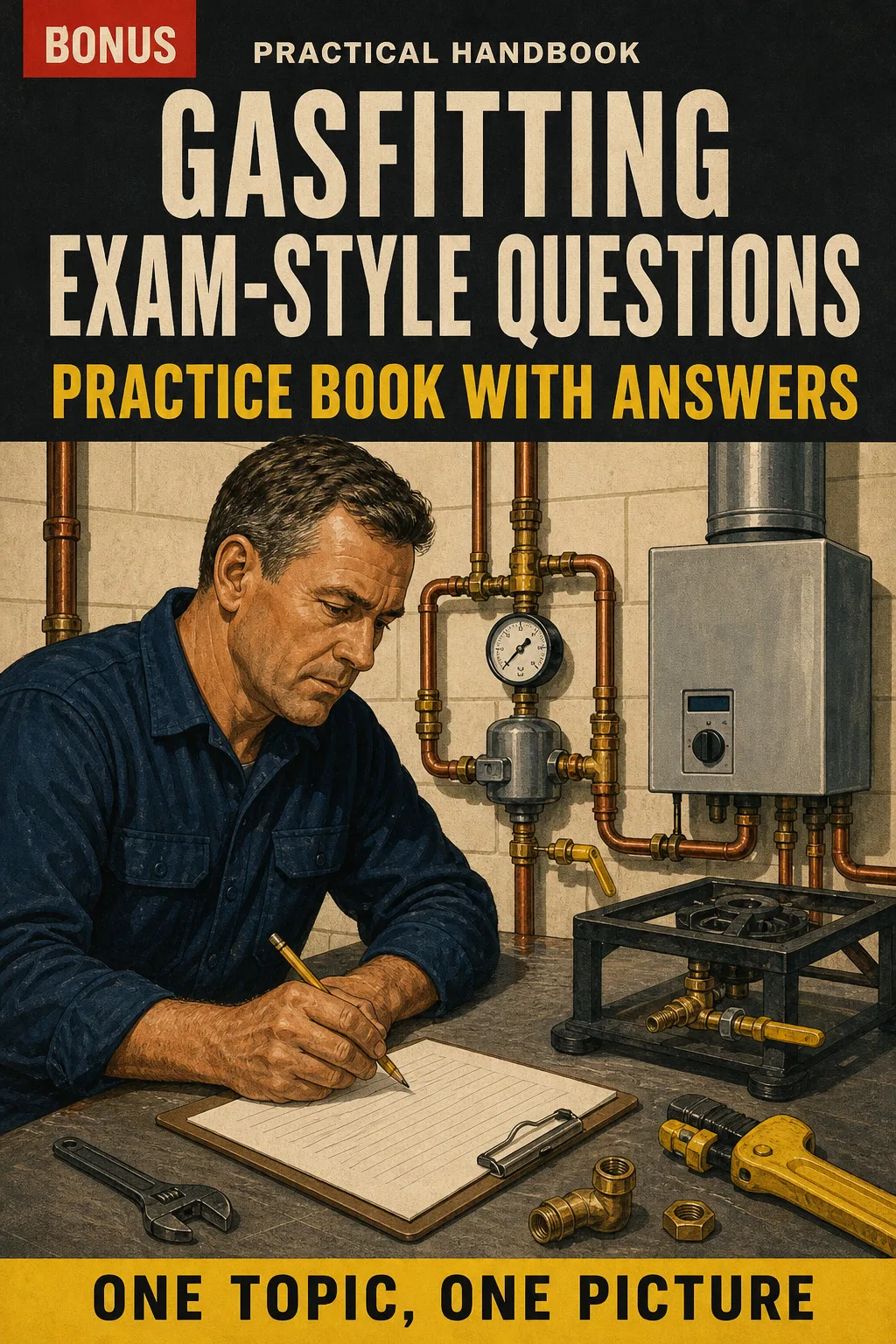
Gasfitting Exam-Style Questions: Practice Book with Answers

BONUS 1: «Gasfitting Exam-Style Questions: Practice Book with Answers»

Value on its own: US$ 17.90

Test yourself topic by topic with exam-style questions, each answer explained with the page and drawing it comes from, so you know exactly what to revise again.

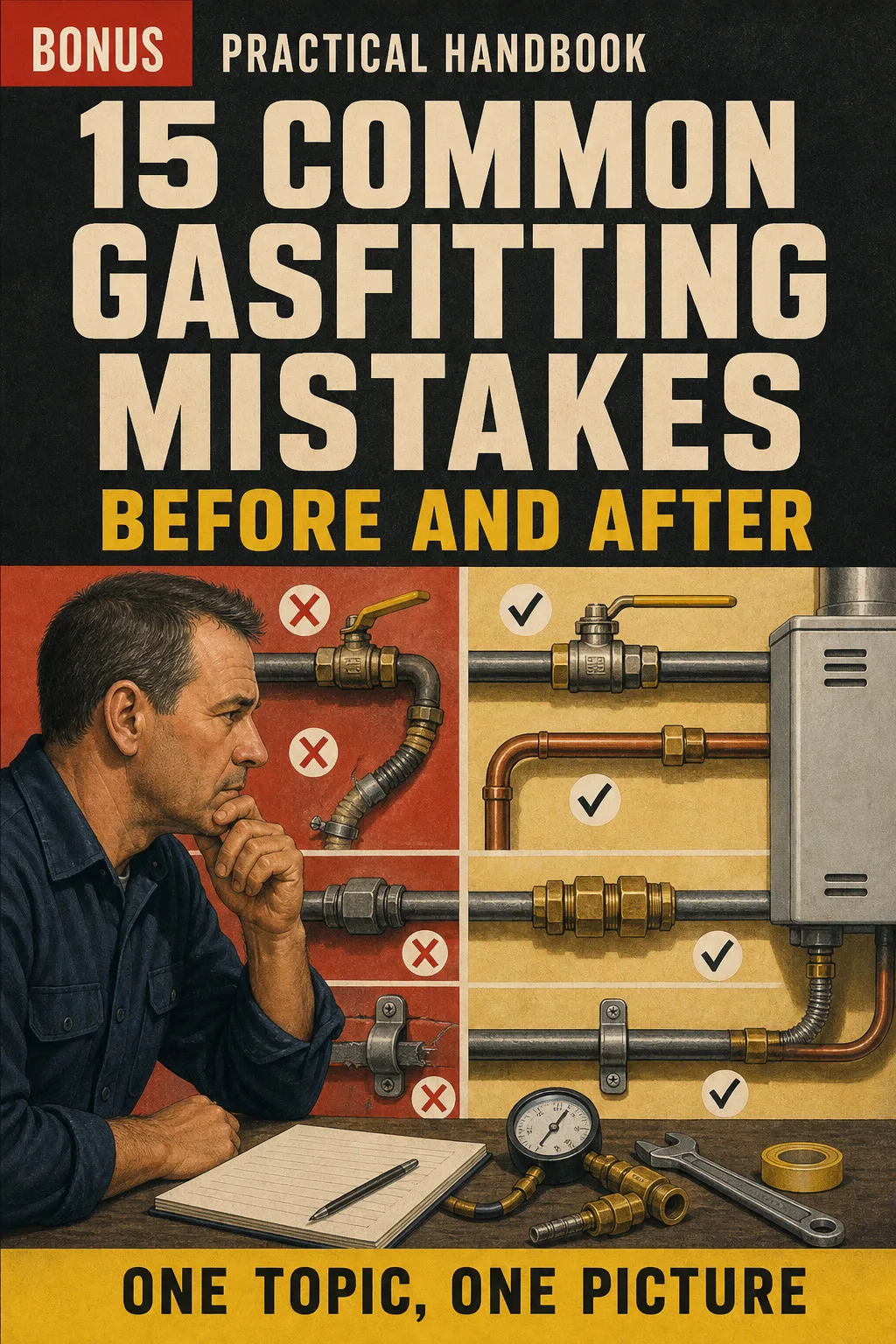
15 Common Gasfitting Mistakes: Before and After

BONUS 2: «15 Common Gasfitting Mistakes: Before and After»

Value on its own: US$ 14.90

See the most common errors on real installations drawn side by side with the correct version, from flue terminal distances to missing isolation valves, so you spot them before an inspector does.

Gasfitting Licence Illustrated with 2 Free Books

  • Gasfitting Licence Illustrated: 66 illustrated pagesUS$ 63
  • BONUS 1: Gasfitting Exam-Style Questions: Practice Book with AnswersUS$ 17.90
  • BONUS 2: 15 Common Gasfitting Mistakes: Before and AfterUS$ 14.90
  • High-resolution PDF to printIncluded
Total value US$ 95.80
YOUR PRICE:
US$ 27
You save US$ 68.80
YES, I WANT GASFITTING LICENCE ILLUSTRATED FOR US$ 27

📄 This is a digital PDF book sent to your email: nothing is printed or shipped.

Secure purchaseEncrypted payment30-day guarantee

PDF by email: We email you Gasfitting Licence Illustrated as a PDF, together with the two free books. It's a single payment: no installments, no extra charges.

Who This Book Is For

You're an apprentice in your final years

You're an apprentice in your final years

The whole gasfitting syllabus in the order the gas flows, so every rule from the TAFE notes has a place and a drawing.

Your licence exam is coming up

Your licence exam is coming up

One page per topic to revise at a glance, plus the practice book to test yourself and see which page to go back to.

You already do plumbing and gas work

You already do plumbing and gas work

Print it and keep it in the ute: pipe materials, soundness test steps, flue clearances and commissioning, ready before the inspector arrives.

Everything You Get Today

US$ 95.80US$ 27
YES, I WANT GASFITTING LICENCE ILLUSTRATED FOR US$ 27

📄 This is a digital PDF book sent to your email: nothing is printed or shipped.

30DAYS
GUARANTEE

30-Day Guarantee

Try Gasfitting Licence Illustrated for 30 days, bonus books included.

We refund everything if the file won't open, if the book isn't what you see here, if you were charged twice or if the email doesn't arrive. Just email us.

You pay once. No subscriptions.

Frequently Asked Questions

Is it for me if I've been a plumber for years and I'm now adding gasfitting?

Yes. It doesn't explain what a tap is: it goes straight to gas, from the meter or cylinder to the flue, in one fixed order. It's written for Australia and AS/NZS 5601.1, with kPa, MJ/h and metres, no inches or psi.

Where does the content come from?

From AS/NZS 5601.1 (current edition), which is used across Australia, and the Victorian gasfitting licence and registration requirements. If you're licensed in another state, the standard is the same, but check your state regulator's local rules and exam requirements. The tables of the standard are not reproduced: the book uses its own drawn examples. Always check the current edition and the manufacturer's instructions.

Is it official material?

No. It's independent study material, not produced, approved or endorsed by Standards Australia or any regulator.

Does it replace the course or the training?

No. It helps you revise what you learn in your training and on the job, but it doesn't replace accredited training, supervised work or the licence, and it doesn't give you a certificate or count towards any unit.

Are the practice questions the ones in the exam?

No. They're exam-style questions written for this book, each answer linked to the page it comes from.

When and how does it arrive?

As a PDF by email, to the address you enter at checkout. The 2 bonus books come with it.

Do I have to pay every month?

No. It's a one-off payment, with no subscription.

Can I have it on paper?

Yes. The PDF is made to print, so you can keep the pages you need in the ute or on the job.

How does the refund work?

You have 30 days. We refund everything if the file won't open, if the book isn't what you see on this page, if you were charged twice or if the email doesn't arrive: just email us.

Before You Close This Page

No more rereading the standard with nothing sticking.

Pipe materials, soundness tests and flues: you see them drawn and that's it.

You walk into the exam knowing where everything is.

Drawings make studying faster.

The book is right below.

One-time payment: US$ 27 · Guarantee: 30 days · PDF by email

YES, I WANT GASFITTING LICENCE ILLUSTRATED FOR US$ 27

📄 This is a digital PDF book sent to your email: nothing is printed or shipped.